Wool – Natural Fiber with Excellent Temperature Regulation

Wool is a natural fiber obtained predominantly from the fleece of sheep. It is one of the oldest materials for clothing and has been used for thousands of years for warm, durable textiles.
Wool is particularly known for its insulating properties, its durability, and its ability to absorb moisture without feeling wet. This makes it particularly suitable for clothing in cooler temperatures.
Many sustainable fashion brands – including LANA Organic – use high-quality wool for durable garments that combine comfort and natural materials.
How wool is produced
Wool is obtained by shearing sheep. The fibers are then cleaned, sorted, and spun into yarn.
The main steps are:
- Shearing the sheep
- Cleaning the raw wool
- Carding the fibers
- Spinning into yarn
- Processing into fabrics or knitted goods
This process utilizes a renewable raw material, as sheep grow new fleece every year.
Properties of wool
Wool possesses several natural properties that make it a popular material for clothing.
Temperature-regulating
Wool keeps you warm in winter and can also dissipate excess heat.
Moisture-regulating
The fiber can absorb moisture without feeling damp.
Odor-neutral
Wool absorbs odors less strongly than many synthetic materials.
Durable
High-quality wool fibers are robust and can be worn for many years.
Wool and sustainability
As a natural fiber, wool has several ecological advantages:
- renewable raw material
- biodegradable
- long lifespan of garments
For sustainable fashion, responsible animal husbandry also plays an important role.
Different types of wool
There are many different qualities of wool.
Examples include:
- Virgin wool – freshly shorn wool
- Merino wool – particularly fine and soft wool fiber
- Recycled wool – from recycled textiles
Depending on the type of wool, softness, warmth, and area of application differ.
Why sustainable fashion brands use wool
Wool combines several advantages:
- natural origin
- excellent thermal performance
- high durability
Therefore, it is one of the classic materials for high-quality clothing.
Even LANA Organic uses selected wool qualities to develop timeless and durable fashion.
FAQ about wool
Is wool sustainable?
Wool can be sustainable if it comes from responsible animal husbandry and durable products are manufactured.
Is wool biodegradable?
Yes. Wool consists of natural proteins and can be biodegraded under suitable conditions.
Why does wool smell less quickly?
Wool fibers can absorb moisture, thereby preventing the rapid formation of odors.
Collections
-

Baby Basics Made from Organic Cotton – Soft & Natural
Gentle on the skin, thoughtfully designed for everyday life: Our Baby Basics...
-

Summer that lasts – The Spring & Summer Collection 2026
Our Summer 2026 collection combines light silhouettes, natural colors and high-quality materials...
-

Organic Cotton Sleepwear
Discover women's sleepwear made from 100% organic cotton – pleasantly soft, breathable,...


Discover more about us!
-
 About the materials
What materials do we use?
-
 Information about our production
Learn more about our production process
-
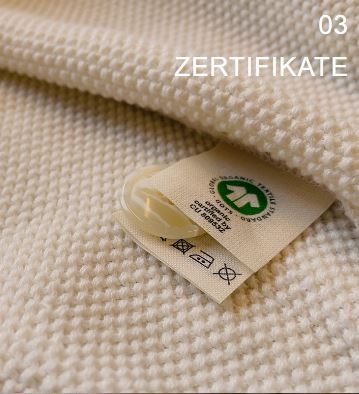 About our certificates
GOTS, vegan - what does that mean?
-
 Information about design and packaging
From the idea to the finished product
-
 Product care tips
This way your favorite piece stays like new for a long time